
Blog
Commercial Roof Leaks: 7 Common Causes on TPO Roofs and How They’re Fixed

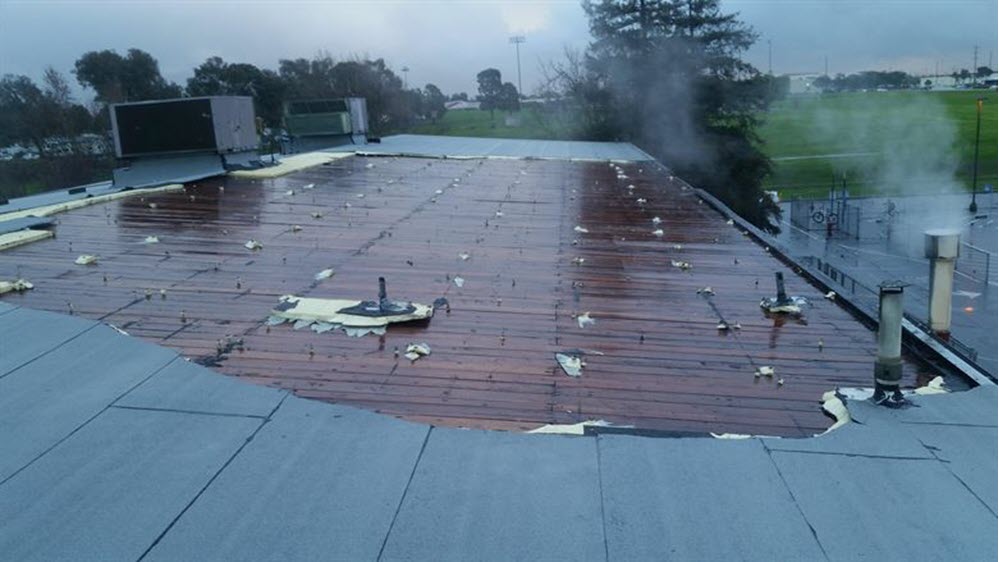
Why Flat Commercial Roofs Leak
Most leaks on a TPO commercial roof don’t start in the middle of the membrane. They start where the roof is interrupted: seams, drains, rooftop units, pipes and the edges where the roof meets a wall. Those details take the most movement, the most foot traffic and the most standing water.
The drip inside the building is also rarely right under the hole. Water travels along the deck and through the insulation before it finds a joint to fall through, sometimes 20 feet or more from where it got in. That is why finding a commercial roof leak starts on the roof, not at the stained ceiling tile.
7 Common Causes of TPO Roof Leaks
1. Why do TPO seams split?
A seam that wasn’t welded fully when the roof was installed can hold for years, then open up as the membrane expands and contracts through hot summers and cold snaps. You’ll see an edge of the top sheet lifting, or a probe slides into the lap. The fix: clean the area, weld it again with hot air, and add a TPO cover strip over any section that won’t take a clean weld.
2. What causes punctures in a TPO roof?
Foot traffic, dropped screws and tools from HVAC service, hail, and fallen branches. Punctures cluster around rooftop units and the path crews walk to reach them. The fix: a round TPO patch welded over the cleaned area. Walk pads along the service path stop the same spot from getting punctured again.
3. Why do pipe boots leak?
The flexible collar around a vent pipe or conduit cracks with age or pulls loose when the pipe moves. The fix: replace the boot with a prefabricated TPO pipe boot welded to the membrane, and seal the top with a new clamp and sealant.
4. Why does a roof leak around HVAC units and curbs?
The flashing that wraps up the sides of a unit’s curb can come loose, especially after units are replaced or moved. The fix: reflash the curb with welded TPO, carried up the sides and terminated under a metal counter-flashing or the unit’s own flange.
5. Why do roof drains leak?
The membrane is clamped into the drain bowl with a ring. If the clamp loosens, the bolts rust, or the bowl is cracked, water gets under the roof at its lowest point. The fix: pull the clamping ring, replace damaged parts, and reset the membrane with new sealant and a tight clamp.
6. Is standing water on a flat roof a problem?
Yes, if it stays more than about 48 hours after rain. Ponding water adds weight, finds any weak seam, and collects dirt that wears the membrane. It usually means a low spot, a sagging deck or a clogged drain. The fix: clear the drain first. If the water still sits, tapered insulation or a cricket added during the next repair or reroof moves it toward the drains.
7. Why do leaks start at parapet walls and edges?
Where the roof turns up a wall, the membrane is held by a termination bar and covered by metal coping on top of the wall. Failed sealant, loose fasteners or split coping joints let water run down behind the membrane. The fix: reseal or replace the termination bar, and seal or replace the coping joints so water can’t get behind the flashing.
When the Roof Starts Leaking
What should I do the day a commercial roof leaks?
- Protect people and equipment. Move stock, electronics and anything under the drip, and put down buckets or a tarp. Rope off wet floors.
- Check the drains. If it is safe to reach the roof, clear leaves and debris from drains and scuppers. A clogged drain is the cheapest leak to fix.
- Photograph everything. Take pictures of the ceiling, the wet area and any damage you can see on the roof, with the date. You’ll want them for insurance.
- Call a commercial roofer. Give them the location of the drip, when it happens (every rain, only in heavy wind, only after storms) and any recent rooftop work.
- Don’t let anyone smear tar on a TPO roof. Asphalt-based sealants don’t bond to TPO and contaminate it, so a proper welded repair costs more later.
How much does a TPO roof repair cost?
Most single repairs, such as a patch, a seam re-weld or a new pipe boot, cost a few hundred dollars to about $1,500, depending on how easy the area is to reach and how much membrane needs work. Flat roof repairs average around $700 nationally. Costs rise when the insulation underneath is wet, the membrane is too old to weld cleanly, or earlier repairs have to be cut out first.
How do roofers find a leak on a flat roof?
They start on the roof above the drip and work uphill along the slope, checking seams, flashing, drains and penetrations. Seams are probed by hand. On larger roofs, an infrared scan or small core cuts show where water has spread into the insulation, which tells you how much of the roof is wet.
Insurance, Warranties and Knowing When to Replace
Will insurance cover a commercial roof leak?
It depends on the cause. Sudden damage from hail, wind or a falling tree is usually covered under a commercial property policy. Leaks from age, wear or skipped maintenance generally are not. Your dated photos and a roofer’s written report on the cause make the claim easier to support.
Does repairing my roof affect the manufacturer’s warranty?
It can. Many TPO warranties require repairs to be done with compatible materials by a qualified installer, and some require you to notify the manufacturer first. Check your warranty paperwork before anyone works on the roof, and keep records of every repair.
How do I know if my roof needs replacing instead of another repair?
Three signs point to replacement: leaks keep appearing in new places, the membrane is brittle or chalky and won’t take a clean weld, or a moisture scan shows wet insulation across a large part of the roof. At that point each repair costs money without stopping the next leak, and wet insulation keeps rotting the deck underneath.
Get Your Commercial Roof Leak Fixed
Doug Patterson Builders repairs and replaces TPO commercial roofs on warehouses, retail centers, churches and light industrial buildings across North Georgia, Cleveland and Chattanooga, TN. We find the source on the roof, weld the repair into the membrane, and probe the seams around it before we leave. If the roof is past repair, we’ll show you the photos and tell you plainly.
Active leaks get priority scheduling.
Call Doug at (706) 537-0328 or request a free roof inspection.
One thought on “Commercial Roof Leaks: 7 Common Causes on TPO Roofs and How They’re Fixed”